
The Selfish Case for Doing Everything
Expect nothing, own everything, and find peace in the chaos of fatherhood.

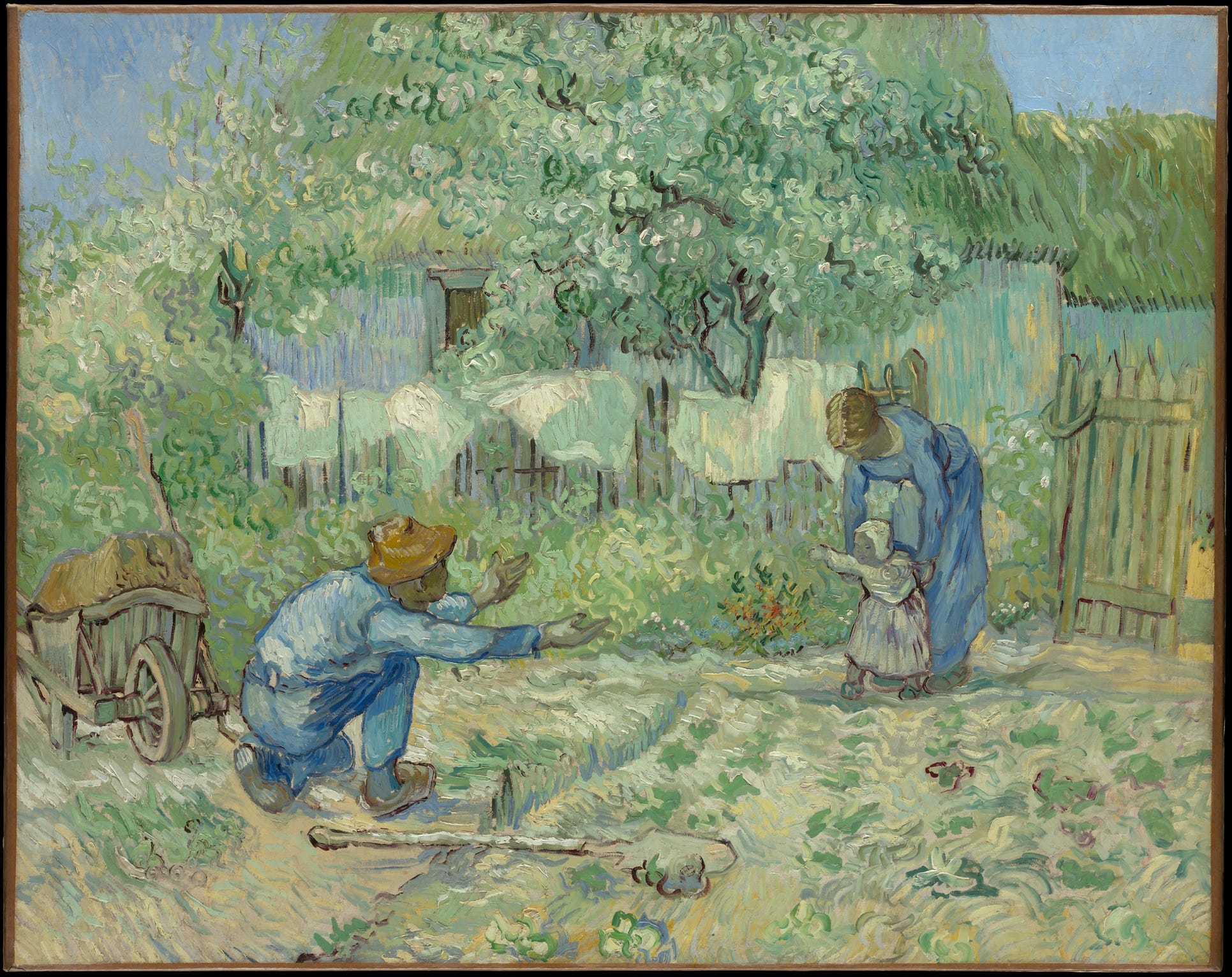
First Steps, after Millet by Vincent van Gogh
We are all busy. Busy with work, busy with life. I thought I was busy too, until the twins arrived. It turns out I wasn’t busy at all, I was living a life of time excess. I had time to do everything and then time to choose to do something else.
Young children not only come with a very literal laundry list of essential daily chores, responsibilities and commitments but also emotional and physical needs that drastically reduce your capacity to do simple things you were doing before they were born. Babies in particular give you way more to do in far less time.
The assignment and management of tasks and responsibilities becomes so chaotic that the idea of equal distribution is so blurred there isn’t much point even trying. However, as human beings in relationships who had similar responsibilities previously, typically we see things through the lens of ‘fairness’. We think, “I’ve done this and this, so that is your job.” You can begin to feel resentful and frustrated that you do more than your fair share, of course, almost always being blind to the incredible pressures and battles your partner is facing.
Facing this exact problem day after day, I stumbled1 across a simple but incredibly effective framework that alleviates the vast majority of the issues both internal and external.
Everything is your responsibility and you will expect nothing in return.
You must shoulder the responsibility, the ownership, and the burdens associated for everything regardless of what your rational brain says. The bins need taking out? Your responsibility. The sick on the floor that your partner didn’t clean up after burping the baby that is now soaking through your socks? Your responsibility. There is a brief respite allowing one parent to grab a nap? You hold down the fort and let your partner rest. Your responsibility.
There is only one way to salvation, and that is to make yourself responsible for all men’s sins. As soon as you make yourself responsible in all sincerity for everything and for everyone, you will see at once that this is really so, and that you are to blame for every one and for all things.
— Fyodor Dostoevsky, The Brothers Karamazov
Taking on everything and anything is not a punishment, it is ultimate liberation. By adopting universal responsibility, you are not beholden to mood or an illusion of fairness. There is a cognitive overhead of trying to decide or understand who should do what. If you lift the responsibility onto your own shoulders, those questions never need to be asked.
Some of these tasks may appear petty, maybe even pedestrian. But when you are sleep deprived with two five-week-old babies crying after a long day at work, trying to remember who was fed last, whether they are overtired, while the toddler demands his dinner and grows grumpier as bedtime looms, and guilt creeps in because you’ve put on Peppa Pig just to claw back an inch of mental space, they stop feeling small very quickly.
The last thing I need or want in that moment is to rationally understand and decide who should be doing what.
Perhaps more importantly, having to make those decisions is often a recipe for resentment. “Why isn’t the washing done?” I think to myself. My thoughts are silent but my actions are loud: I am short in my responses and generally grumpy. This affects everybody, even though I say nothing. My wife is frustrated at my negativity. I am frustrated at her frustration.
By taking total ownership, I own the task and remove the possibility for that resentment to take hold. There is some irony in all of this. These acts of seeming selflessness are actually fairly selfish; they make my life easier.
One important note: there is a fine line between taking absolute responsibility and burning out. This is not a David Goggins-esque manifesto to refuse sleep, run on broken legs and never give in. Sometimes taking responsibility means accepting help, delegating where possible, and resting so you can manage your energy, time and emotions effectively. Set things up so that friends and family know what needs to be done and can step in easily.
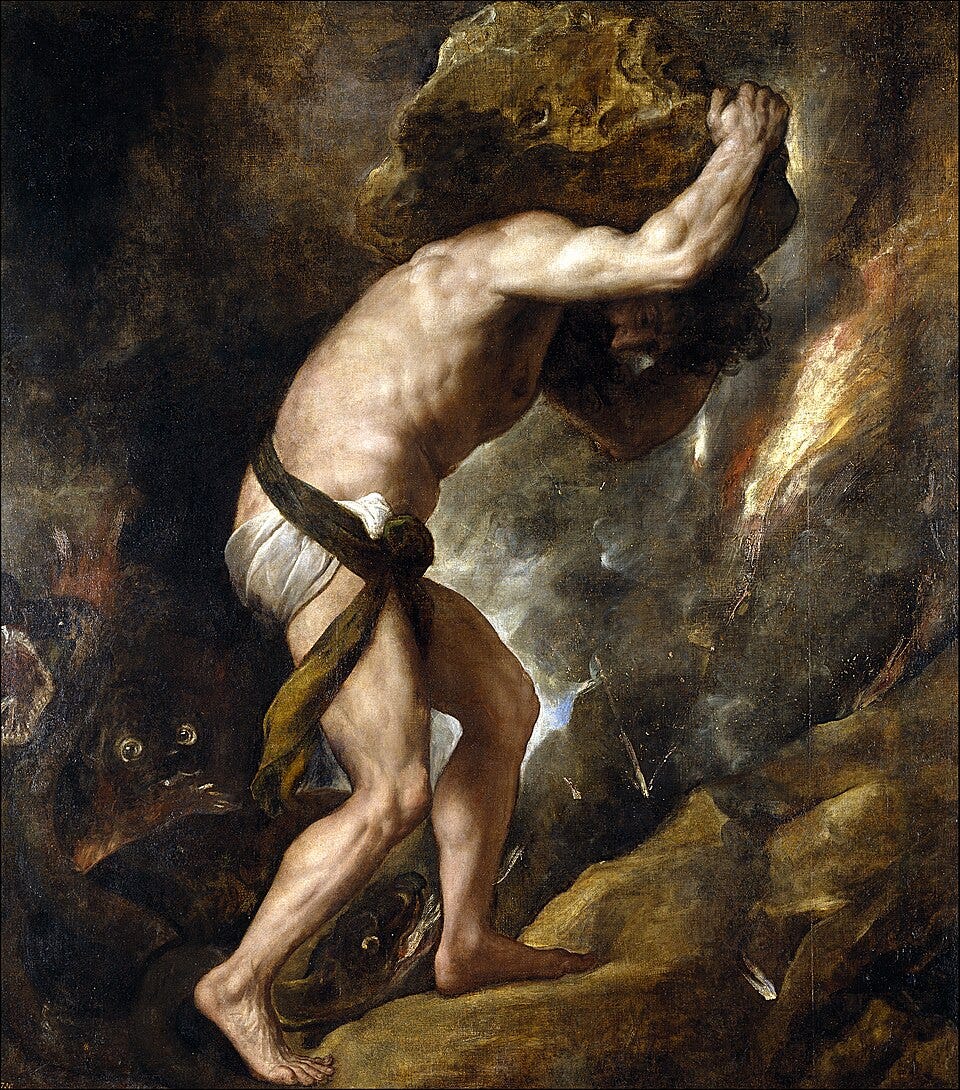
Sisyphus by Titian
The second half is equally important: “you will expect nothing in return”. After you bear the responsibility and take ownership of everything you possibly can, you must expect no thanks, no gratitude and no favours in return. Not even acknowledgement is worth expecting. You are doing this thing, whatever the thing is, because it needs to be done. You are doing it for your partner, for your children and for yourself. Any sense of accomplishment, pride or achievement must be internally generated. This is absolutely imperative. Gratitude must come from within.
The problem with expecting a ‘thank you’ is that you are setting a target that your sleep-deprived partner likely isn’t even aware of, and then you’re getting upset when they inevitably miss it. You are setting them up for failure and yourself for resentment. In the trenches of newborn life, neither of you has the spare energy for constant outward validation. It’s not that your partner isn’t deeply grateful; it’s that demanding the expression of that gratitude is a luxury you simply don’t have time for right now. My suggestion is simply take down the target. Accept that your family s thankful and grateful for you and what you do, the words don’t need to be made explicit.
The struggle itself toward the heights is enough to fill a man’s heart. One must imagine Sisyphus happy.
— Albert Camus
Another important note: avoid martyrdom and point scoring. Taking on all this responsibility, expecting nothing in return, and then making a point of how much you are doing immediately undoes the work. Making others aware of how hard you are working only cultivates more resentment. It creates a “me versus you” dynamic that leads nowhere good.
It is counterintuitive, but I have found that going in head first, taking on more rather than less, is one of the easiest ways to feel in control. And with control comes calm. You feel more settled, more resilient. You rise to the level of your responsibility. And in the chaos of it all, that has been enough.
My AI policy when it comes to writing can be found here.
I think it was somewhere in this Jocko video. I watched it in a fever dream of tiredness in the very early days of the twins’ life.